Establishing a Bulletproof Approval Protocol for Multi-Disciplinary Sets
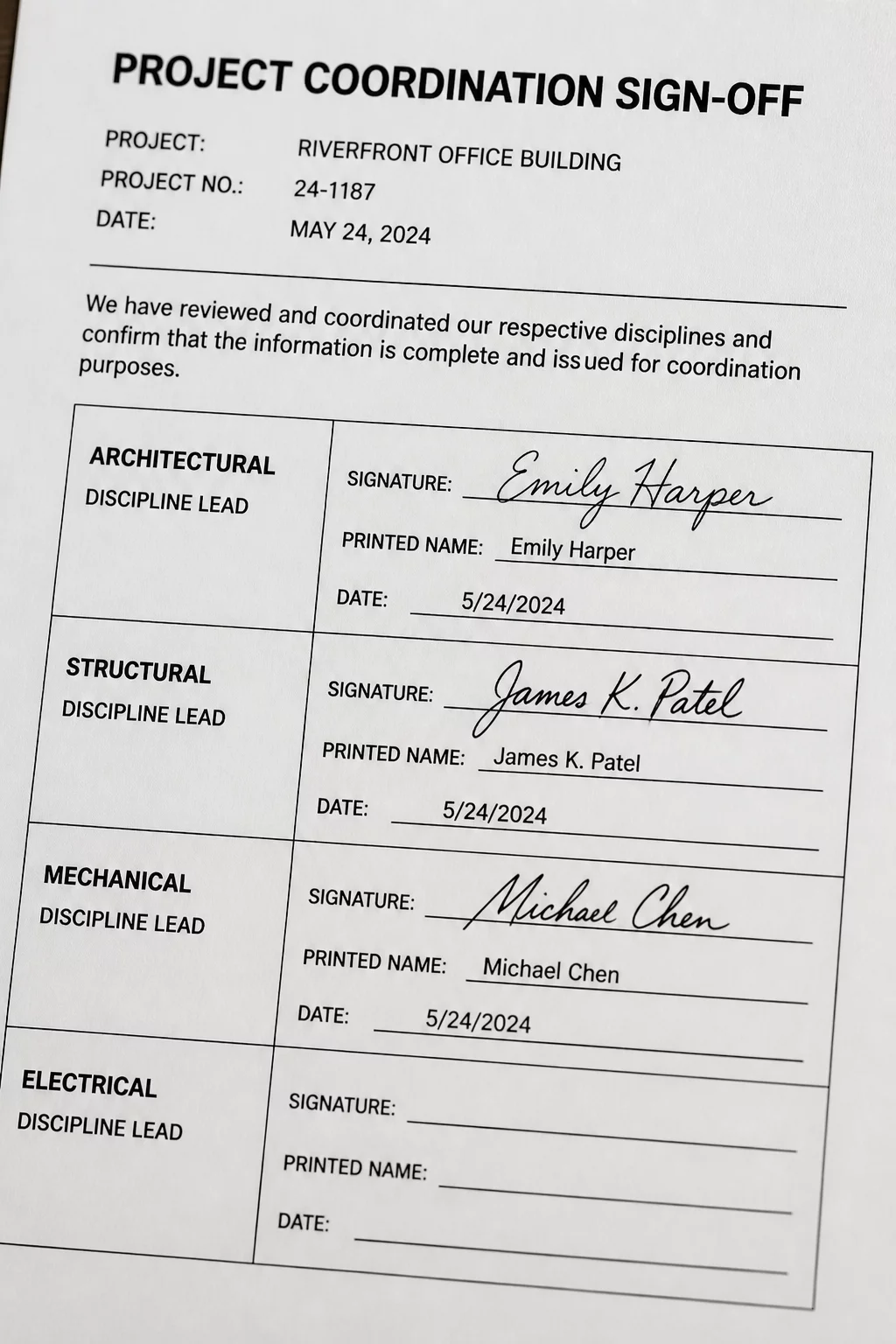
In the high-stakes environment of Architecture, Engineering, and Construction (AEC), the transition between design phases often hinges on a single, critical moment: the consultant coordination sign-off. This isn't just an administrative formality or a simple signature at the bottom of a sheet. It represents a formal declaration that the structural, MEP, and architectural systems have been cross-referenced, clashes have been resolved, and the design intent is unified across all disciplines. Without a robust sign-off protocol, projects often fall into the trap of "designing in silos," where a pipe might suddenly intersect a structural beam three weeks into construction.
The Anatomy of an Effective Sign-off
A successful sign-off process requires more than just a "looks good" email. It demands a structured verification that specific coordination tasks have been completed. This includes verifying that the latest architectural backgrounds have been used by all consultants and that any changes in column locations or floor thicknesses have been accounted for in the mechanical duct routing. We typically see the most success when firms utilize a standardized coordination matrix. This matrix lists every major interface point—such as ceiling heights versus duct sizes—and requires a specific "Approved" status from both the architect and the relevant engineer before the set moves to the next issuance.
Defining Accountability and Ownership
One of the biggest friction points in change management is determining who actually owns the resolution of a conflict. During the sign-off phase, it is vital to assign clear ownership. If a structural brace interferes with a plumbing chase, the sign-off document must record which party is responsible for the redesign. By formalizing this through a sign-off sheet, you create a clear audit trail. This prevents the "I thought they were fixing it" excuse that often leads to costly field bulletins later in the project lifecycle.
Establishing the Digital Paper Trail
In the modern era, physical signatures are being replaced by digital workflows in platforms like Bluebeam Revu. A digital sign-off should be timestamped and linked directly to the version of the drawing set being approved. This ensures that if a revision occurs after the sign-off, the approval is automatically flagged as "outdated," prompting a fresh review. It is a dynamic safeguard that keeps the entire team synchronized as the design evolves.
Frequently Asked Questions
When should the sign-off happen?
Ideally, sign-offs should occur at the end of every major design milestone (50% DD, 100% DD, 90% CD) and before any permit or bid issuance. Waiting until the final construction set is ready is usually too late to fix deep-seated coordination issues without significant rework.
What happens if a consultant refuses to sign?
A refusal to sign is actually a successful use of the system. It identifies an unresolved conflict that needs immediate attention. The project manager should facilitate a coordination meeting to resolve the specific blocker rather than pressuring for a signature on an uncoordinated set.
Discussion & Feedback
No comments yet. Be the first to leave a comment.
Leave a Comment