Establishing a Culture of Accountability in Project Coordination
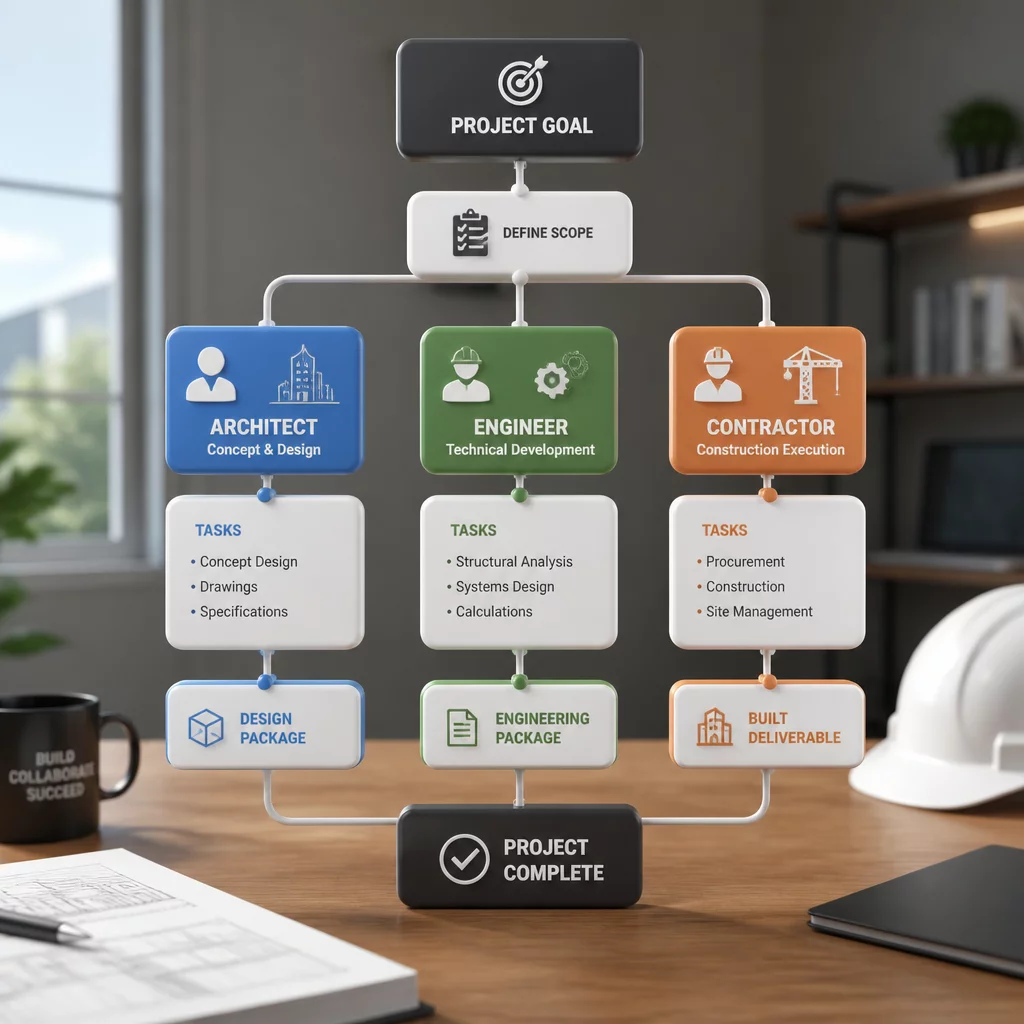
Assigning issue ownership isn't just about tagging a name in a PDF markup tool; it’s about defining who carries the risk and who possesses the technical authority to resolve a conflict. In the fast-paced environment of AEC coordination, ambiguity is the enemy of progress. When a clash appears on a sheet, or a dimension looks suspicious, the first question shouldn't be "how do we fix it?" but "who owns the fix?" Without a designated owner, issues float in a vacuum of collective responsibility, often resulting in last-minute field changes and expensive RFIs.
The Logic of Clear Accountability
Effective ownership assignment relies on the principle of the "Single Point of Responsibility." Even if multiple consultants are involved in a clash, one party must be the primary driver of the solution. This individual is responsible for initiating the coordination meeting, drafting the proposed resolution, and ensuring the final sheet revision reflects the agreed-upon change.
Standardizing the Assignment Protocol
To avoid confusion, teams should adopt a standardized protocol for assignment during the review process. Instead of guessing, use these three criteria to identify the rightful owner of an issue:
1. Discipline-Based Root Cause
If a duct hits a structural beam, the mechanical engineer typically owns the initial adjustment attempt, as ductwork is generally more flexible than structural steel. The owner is the one whose system is easiest or most logical to move without compromising the building's integrity.
2. The Handoff Transition
Ownership shifts during different project phases. During design development, the Architect typically owns coordination issues. However, once a project moves into construction administration, ownership often shifts to the General Contractor or a specific subcontractor to manage field-related variances. Recognizing these shifts prevents issues from getting stuck in an outdated owner's queue.
3. Document Control Authority
Sometimes, the owner is simply the person who has the "write access" to the specific sheet in question. If a detail needs updating on the structural set, the Structural Engineer must own that issue, even if the request came from the plumbing contractor.
Avoiding the "Everyone and No One" Trap
One common mistake is assigning a single issue to an entire firm or a broad group (e.g., "Mechanical Team"). This almost always leads to delays. Assign issues to a specific human being. This creates a psychological contract of accountability. When an individual sees their name next to a red flag on a dashboard, the urgency to resolve it increases significantly compared to a generic group tag.
"An issue without a specific owner is merely a suggestion that will likely be ignored until it becomes a crisis."
Frequently Asked Questions
Who owns a clash between two disciplines if neither wants to move?
In these scenarios, the Lead Architect or the BIM Coordinator must act as the arbiter. They will evaluate the cost, schedule impact, and design intent to force a decision and assign ownership to the most logical party.
What happens if the assigned owner doesn't respond?
Establish a "three-day rule." If an owner does not acknowledge or provide a status update within 72 hours, the issue should be escalated to the project manager. Automated notification systems in tools like Bluebeam or Procore are essential for maintaining this tempo.
Discussion & Feedback
Steve Rogers
AEC Member • 2026-07-13Ownership is the biggest hurdle. Without a clear protocol, we just pass the buck back and forth.
Tony Stark
AEC Member • 2026-07-14Good framework for accountability. The three-day rule is a game-changer for project tempo.
Leave a Comment