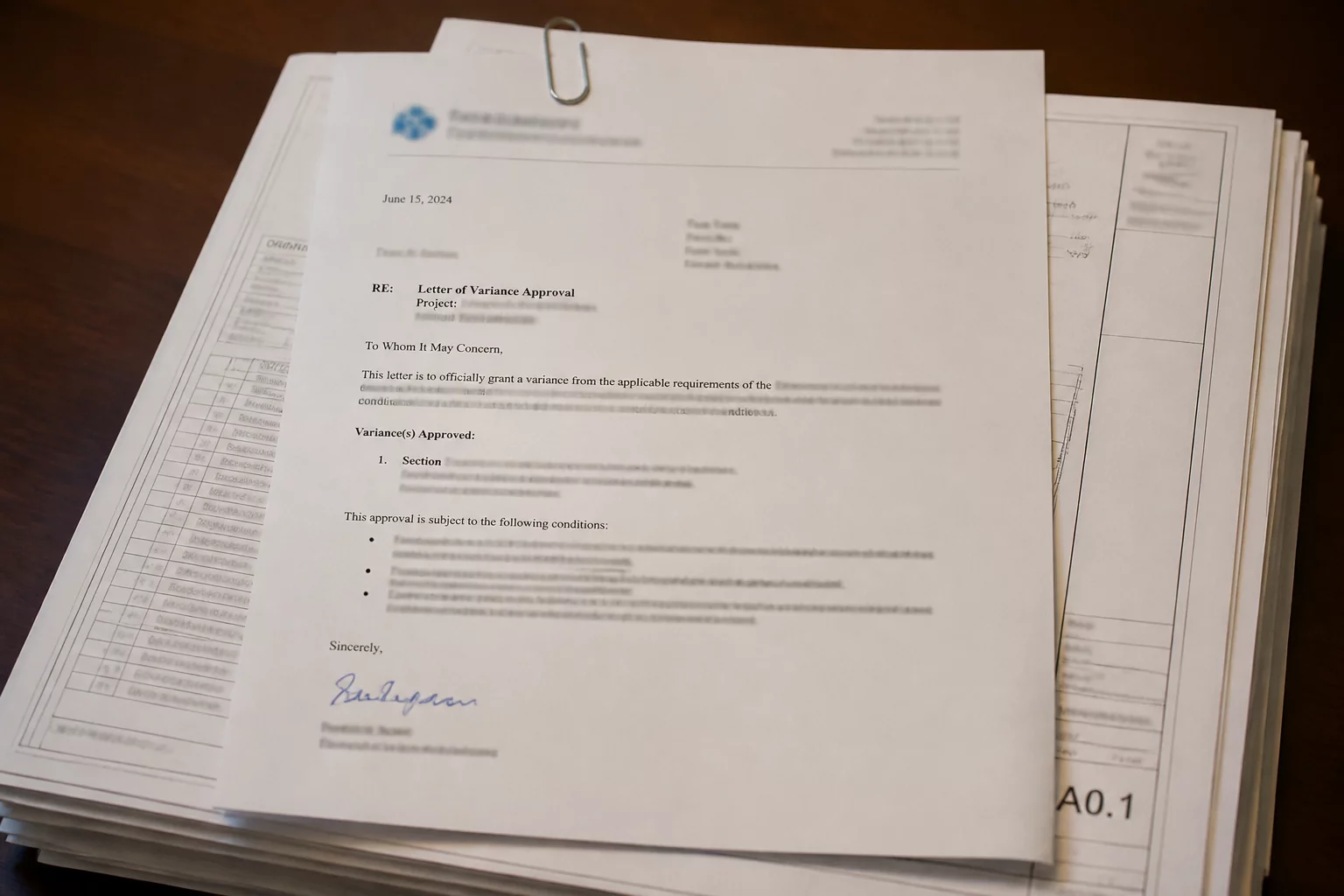
Protocols for Authorizing and Documenting Design Deviations
A design variance represents a formal departure from the contract documents within the complex environment of AEC (Architecture, Engineering, and Construction). Unforeseen site conditions, material procurement issues, or value engineering proposals often drive these deviations. Managing these changes through a rigorous approval process protects the project from coordination failures and long-term legal liabilities.
The Anatomy of a Variance Request
Variances do not simply appear on a drawing set; they originate from a specific trigger, such as a Request for Information (RFI) or a Field Bulletin. The requesting party must define the original design intent clearly and provide a technical justification for the proposed shift. Without this baseline comparison, the review team cannot evaluate the impact on structural integrity, life safety systems, or aesthetic requirements effectively.
Standard Approval Workflow
Establishing a predictable path for authorization ensures that every stakeholder remains informed before work proceeds in the field. Follow these essential stages:
- Formal Submission: The contractor or consultant compiles a package including sketches, material data, and a comprehensive cost impact analysis.
- Technical Review: The Architect of Record (AOR) and relevant engineering disciplines assess the feasibility of the deviation against project standards.
- Owner Authorization: Variances affecting the project budget or final program require the owner to provide explicit written consent.
- Official Issuance: Upon receiving approval, the team formalizes the variance through a Change Order or an Addendum, integrating it into the legal contract set.
Impact on Sheet Coordination
A common pitfall in change management involves failing to propagate a variance across all affected drawing sheets. A change in a wall assembly on an architectural floor plan frequently impacts the reflected ceiling plan, structural framing, and electrical outlet layouts. A design variance approval remains incomplete until the coordination lead verifies that every cross-discipline reference has been updated to reflect the new condition.
Frequently Asked Questions
Who holds the final authority on a design variance?
The Owner typically controls budget-related decisions, yet the Architect of Record maintains legal responsibility for life safety and code compliance. Building codes and regulations take precedence; therefore, a variance cannot be implemented while it violates local laws, regardless of owner preferences.
Does every variance require a Change Order?
Not all deviations involve financial shifts. Some variances function as no-cost changes that only require a supplemental instruction or a field clarification. However, documentation of any scope change remains vital to protect all parties during final project closeout.
Discussion & Feedback
No comments yet. Be the first to leave a comment.
Leave a Comment