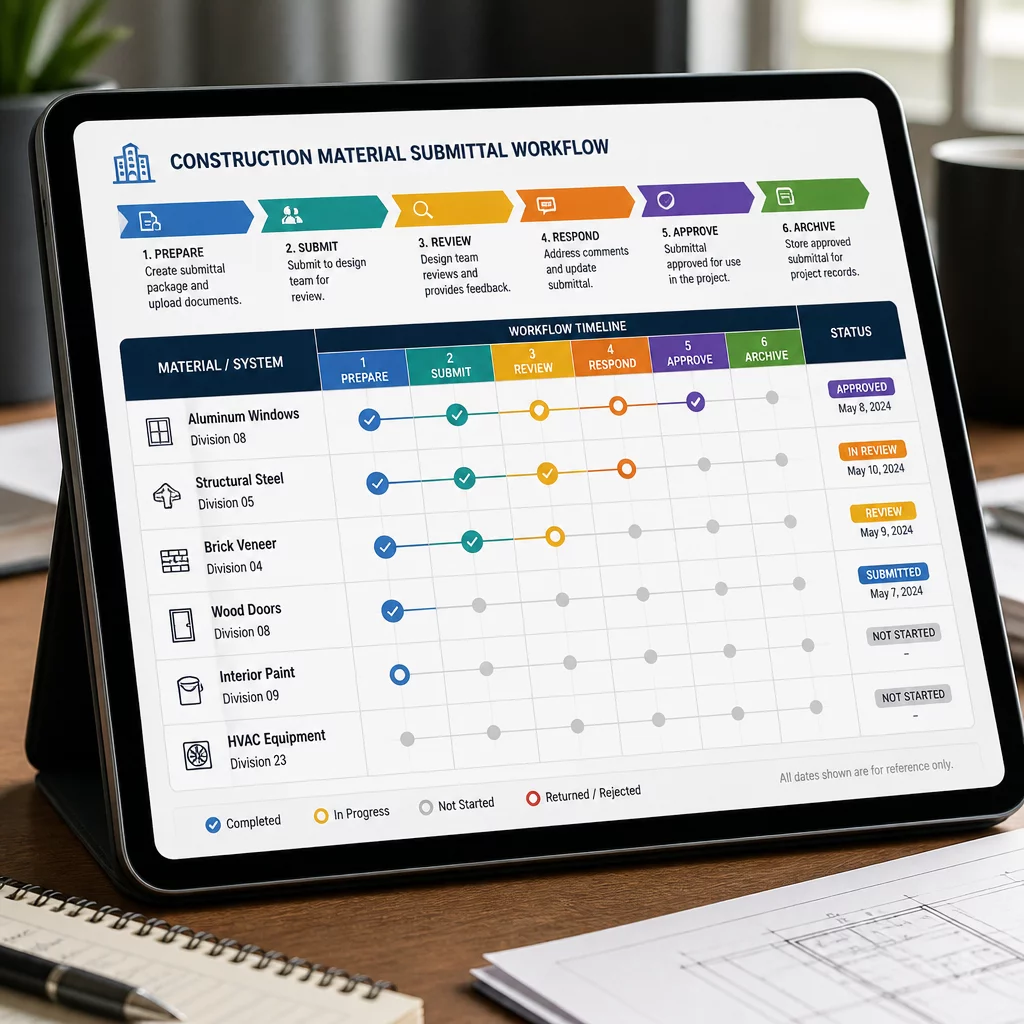
Optimizing Approval Cycles for Construction Documentation
Submittals represent the final checkpoint before materials arrive at the job site. A submittal review workflow isn't just about checking a box; it is a systematic verification that the contractor's proposed materials, equipment, and shop drawings align perfectly with the contract documents. Without a clear logic for these reviews, projects often suffer from "approval drift," where items are partially reviewed or approved with conflicting notes from different consultants.
Effective workflows usually follow a four-stage path: initial contractor quality control, consultant technical review, inter-disciplinary coordination, and final distribution. During the coordination phase, the primary reviewer must ensure that a mechanical submittal, for instance, doesn't conflict with structural clearances or electrical power requirements. This is where most errors are caught and where the coordination of sheets becomes critical.
Standardizing the Approval Status
To maintain momentum, teams should adopt a standardized status system. While "Approved" and "Rejected" are clear, the "Approved as Noted" status is often where the most risk lies. It requires the contractor to incorporate specific changes without resubmitting, which places a heavy burden on field verification. If the notes are extensive, a "Revise and Resubmit" is always the safer path for project quality to ensure the changes are documented on the actual shop drawings.
Key metrics to track include average turnaround time and the percentage of submittals requiring more than two rounds of review. High resubmission rates usually point to either poor initial documentation or overly vague specifications. By analyzing these workflows, management can identify which disciplines are falling behind or where the design intent is being misunderstood by the field teams.
Common Workflow Questions
- What is the standard turnaround time? Typically, review cycles last between 10 to 14 business days, though complex systems like curtain walls or MEP equipment may require extended periods for multi-consultant sign-off.
- Who has final authority? The Architect of Record usually provides the final stamp, but they rely heavily on the Engineer of Record's specialized technical sign-off for structural or mechanical systems.
- When should a submittal be rejected? Rejection is necessary when the proposed material deviates significantly from the performance specifications or when it introduces a conflict with other building systems that cannot be easily resolved.
Discussion & Feedback
Leave a Comment