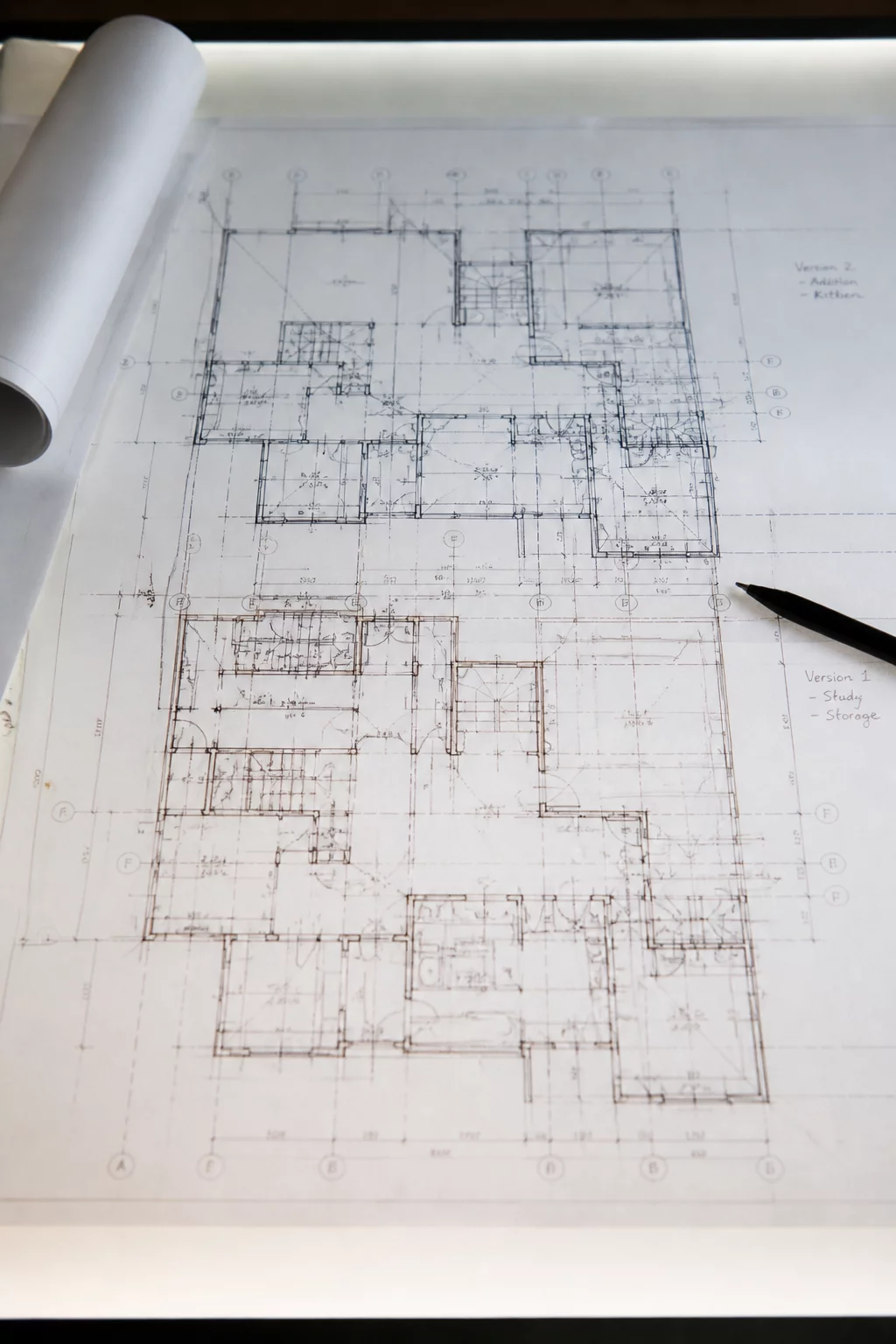
The Logic of Document Evolution
Tracking design changes in a complex architectural set is often compared to finding a needle in a haystack, except the haystack is made of thousands of lines and the needle is a slightly moved partition. When a new revision arrives, the primary objective is to isolate what actually changed from what remained static. Most teams rely on revision clouds, but seasoned reviewers know that clouds are only as reliable as the person drawing them. Relying solely on visual cues leads to missed scope and coordination gaps that eventually manifest as expensive RFIs during construction.
To maintain document integrity, follow a structured verification process that looks beyond the clouds. Start by reviewing the revision narrative or delta block in the title section. This provides the context for the update, whether it was driven by an owner request, a code correction, or a coordination clash resolution. Once the intent is understood, the technical comparison begins.
The Power of Digital Overlays
Modern workflows leverage digital overlay tools to highlight discrepancies instantly. By using a "Difference" or "Overlay" mode in software like Bluebeam Revu, you can stack two versions of a sheet. The static elements disappear into a neutral gray, while additions and deletions pop in contrasting colors like red and blue. This method exposes "hidden" changes—those subtle shifts in dimension or text that the designer forgot to cloud.
Verification Steps for New Revisions
- Compare the revision date on the title block with the previous issuance to ensure no intermediate versions were missed.
- Cross-check the delta markers against the revision log to confirm every marked change has a corresponding description.
- Scan the entire sheet for unclouded changes using the overlay technique mentioned above.
- Identify the ripple effect: if a wall moved on the architectural plan, verify that the structural grid and MEP penetrations were updated accordingly.
A change is never isolated. It exists within a network of dependent sheets. When you track a change, you are not just checking a box; you are ensuring that the entire set of construction documents remains a single, cohesive source of truth. Without this rigorous tracking, the coordination between disciplines breaks down, leading to field bulletins and change orders that could have been avoided at the drafting table.
Frequently Asked Questions
What should I do if I find an unclouded change? Notify the design lead immediately. Unclouded changes are high-risk because the contractor might not price or build them, leading to disputes later. Document the find and request a corrected issuance.
How often should I perform an overlay check? Every time a new set or bulletin is issued. Even if the changes are minor, an overlay check takes minutes and can save thousands of dollars in rework.
Discussion & Feedback
Clint Barton
AEC Member • 2026-07-02Tracking changes made easy.
Wanda Maximoff
AEC Member • 2026-07-03Great insights.
Leave a Comment