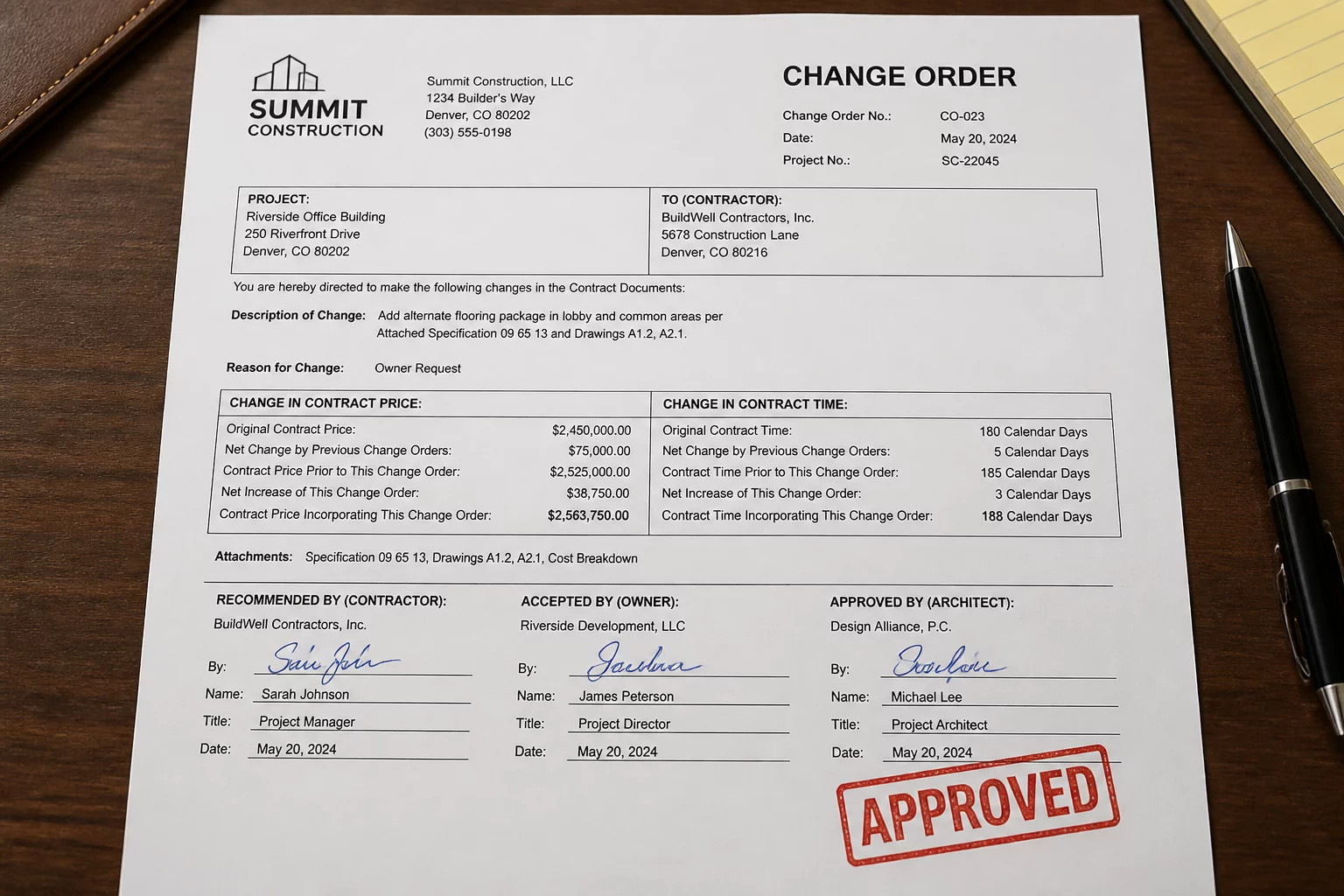
Why Every Construction Change Needs a Paper Trail
In the high-stakes world of commercial construction, a Change Order (CO) serves as the definitive record of deviation from the contract documents. It is not merely a request for more funds or time; it is a vital update to the project’s DNA. Without meticulous documentation, the logic of the entire build can unravel, leading to costly disputes and structural inconsistencies that appear long after the scaffolding is removed.
The Lifecycle of a Documented Change
The process typically initiates with a Request for Information (RFI) or a Field Bulletin issued by the design team. Once the necessity of a change is confirmed, the project team generates a Change Order Proposal (COP). This proposal details the specific modifications, the associated costs, and any impacts on the project timeline. Upon formal approval by the owner and the lead architect, the proposal transitions into an official Change Order, which is then incorporated into the master contract. Every step in this lifecycle requires timestamped entries and clear ownership to prevent accountability gaps.
Best Practices for Revision Clarity
Effective documentation relies on more than just filling out a form. Follow these strict protocols to ensure your records stand up to any audit:
- Cross-Reference Everything: Always link the CO to the specific RFI number and the affected sheet numbers in the drawing set.
- Visual Evidence: Attach high-resolution photos of field conditions or screenshots of 3D coordination models to provide undeniable context for the change.
- Quantifiable Impacts: Clearly state the exact number of man-hours, material quantities, and equipment rentals involved in the deviation.
- Timely Sign-offs: Ensure all parties sign the document before the physical work commences. This prevents "constructive change" claims where work is performed without prior authorization.
Common Documentation Failures
One of the most frequent errors is relying on verbal directives from field superintendents. A quick conversation on-site might solve an immediate problem, but without a written trail, that decision is invisible to the accounting and legal teams. Another pitfall involves vague descriptions. Phrases like "modify plumbing as discussed" offer no protection during a final audit. Precision is the only safeguard against ambiguity in AEC coordination.
Frequently Asked Questions
Who is responsible for the final CO log?
The General Contractor usually maintains the master log, but the Architect must verify it against their own records during every pay application review to ensure consistency.
Can a Change Order be issued for zero cost?
Yes. Many changes affect only the design logic or material specifications without altering the budget. These "no-cost" orders are still essential for maintaining accurate as-built records and legal compliance.
Discussion & Feedback
No comments yet. Be the first to share your experience with change order protocols!
Leave a Comment