Navigating the Complexity of Live Healthcare Upgrades
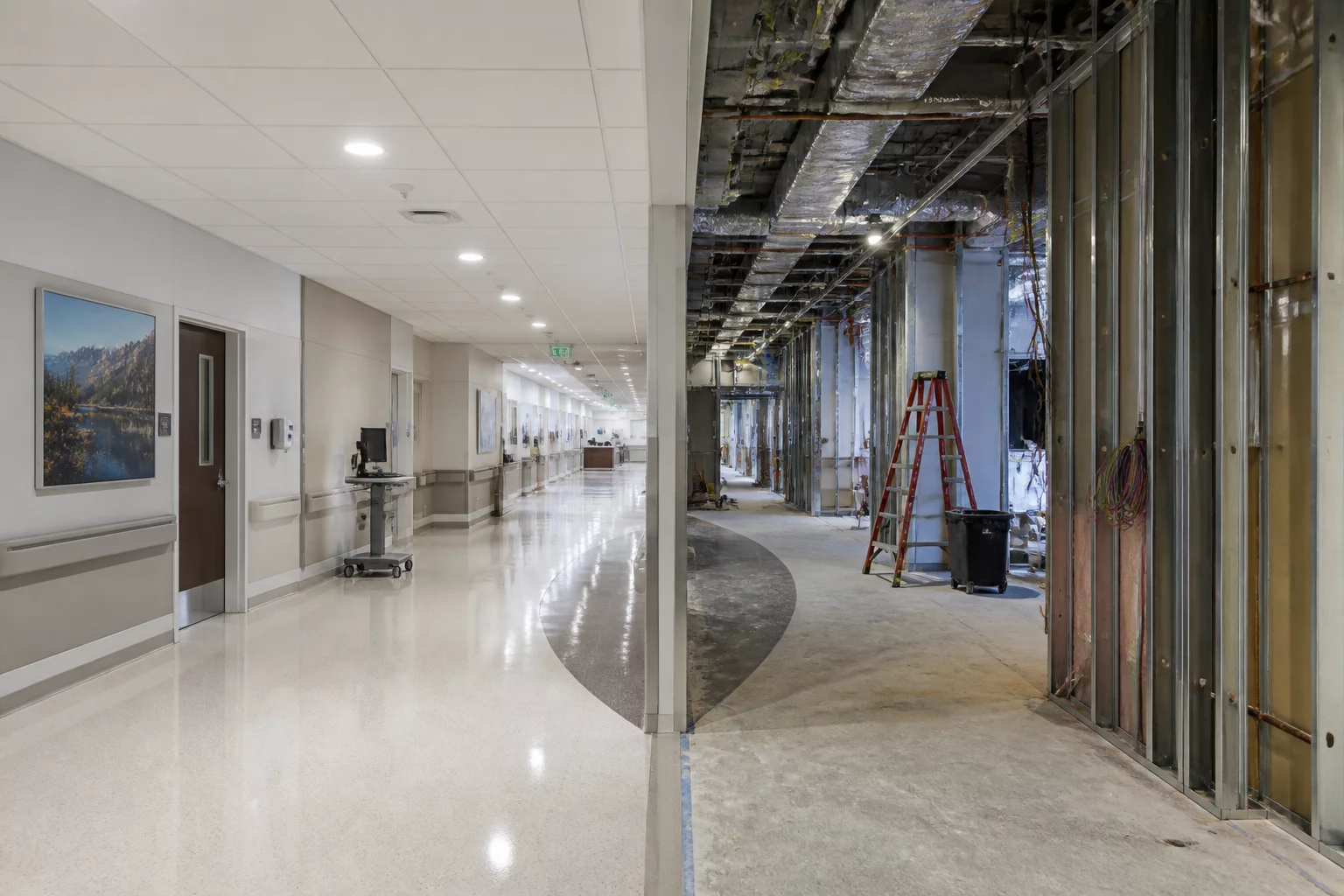
Hospital renovations represent some of the most complex challenges in the AEC industry. Unlike new builds, these projects require surgical precision to ensure life-safety systems remain operational while construction progresses. In this case study, we examine the document review process for the St. Jude North Wing Expansion, a project involving 450 sheets and over 15 distinct engineering disciplines.
The Challenge: Phasing and Life Safety
The primary hurdle was the intricate phasing. The hospital remained fully functional during the 18-month renovation. This meant that every architectural revision had to be cross-checked against the life-safety plan to ensure egress paths were never compromised. We found that standard sheet-to-sheet reviews weren't enough; we needed a logic-based approach that tracked changes across time as well as space.
Implementation of the SheetReason Protocol
We applied the SheetReason methodology to verify consistency between architectural floor plans and MEP reflected ceiling plans. By focusing on 'hidden revisions'—changes in one discipline that impact another without being explicitly noted—we identified over 40 potential clashes before they reached the field.
- Structural Alignment: Verifying that new seismic bracing didn't obstruct critical oxygen lines in the ICU.
- Consistency Checks: Ensuring room numbers matched across the equipment schedule, the floor plan, and the electrical circuit sheets.
- Scale Verification: Double-checking that detailed medical equipment callouts scaled correctly across different sheets to avoid installation errors.
Results and Lessons Learned
The result was a 30% reduction in RFIs compared to previous phases. The key takeaway was the importance of the 'Project Handoff' stage. When the design team clearly communicated the logic behind the sheet organization, the review team could process revisions with much higher accuracy. It proves that a coordinated set is not just about drawing lines, but about managing the logic behind those lines.
Case FAQ
How do you manage revisions in a live environment?
We prioritize life-safety and MEP sheets, as these systems are critical for hospital operations. Every revision is reviewed against the current 'as-built' status of the facility.
What is the biggest risk in hospital document reviews?
The biggest risk is the 'hidden revision' where a small architectural change in a wall location renders a pre-ordered medical headwall unit unusable.
Discussion & Feedback
No comments yet. Be the first to leave a comment on this case study.
Leave a Comment