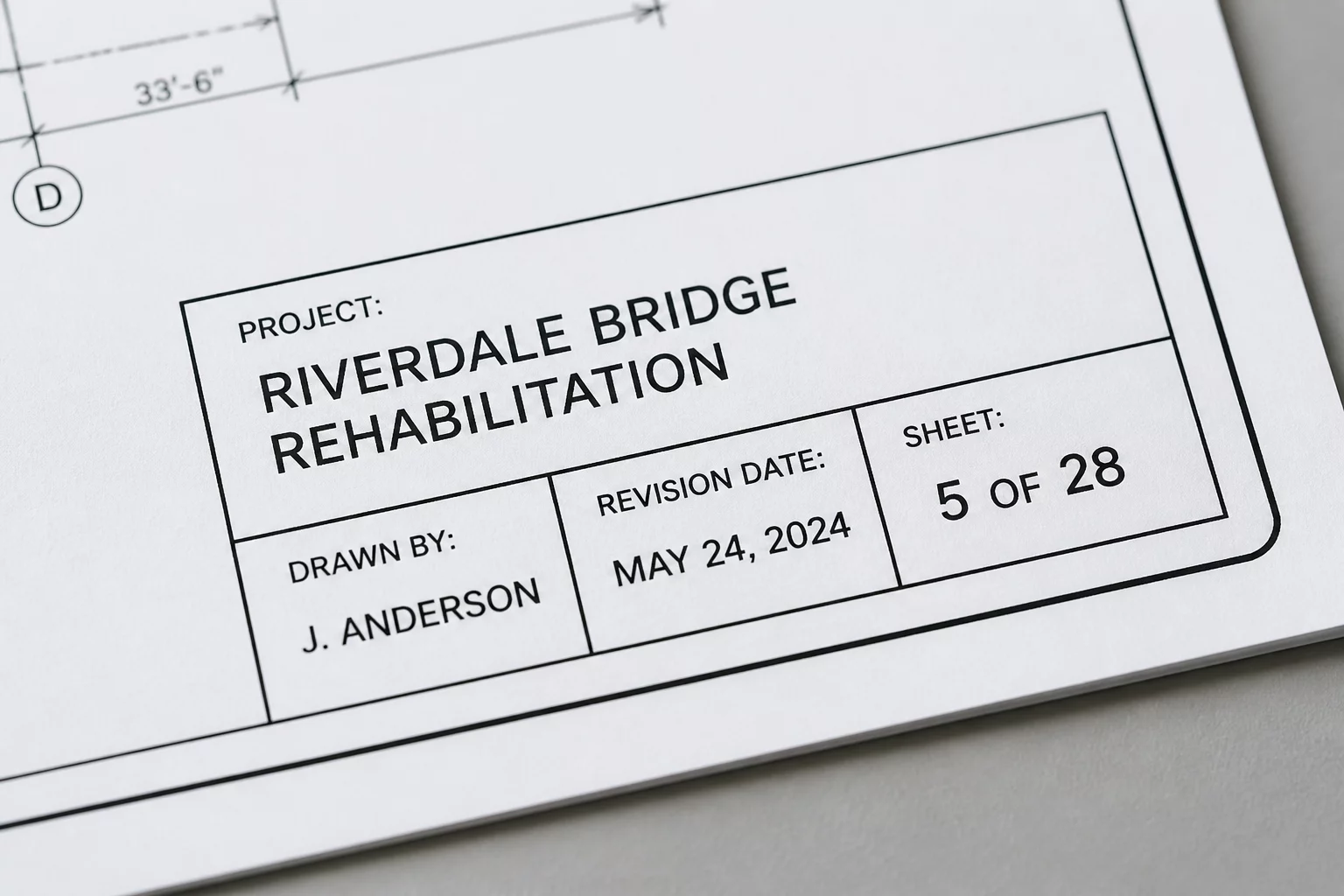
Ensuring Document Integrity Through Rigorous Title Block Validation
A title block serves as the definitive metadata engine for construction documentation. It provides the legal, temporal, and navigational context required for every professional engaged in the design and construction process. Without a standardized verification protocol, project teams risk using outdated information, leading to costly field errors and coordination clashes.
Core Verification Objectives
The primary goal of this protocol is to ensure that every participant—from the lead architect to the field foreman—is working with the same version of reality. A rigorous check focuses on identifying discrepancies between the sheet content and its administrative metadata.
- Project Identification: Confirm the project name, number, and phase match the master contract documents.
- Sheet Hierarchy: Verify that the sheet number follows the established discipline prefix (e.g., A for Architectural, S for Structural).
- Revision Synchronization: Ensure the revision date and issue description align with the most recent transmittal record.
- Professional Accountability: Validate that the 'Drawn By', 'Checked By', and 'Approved By' fields are populated with current team initials.
Protocol Execution Steps
Follow these steps for every sheet in the set before final issuance or when reviewing incoming consultant packages.
1. Global Data Consistency Check
Examine the title block areas that remain constant across the entire set. Small typos in the project name or address can create legal complications. Cross-reference the project number against the internal accounting system and the client contract.
2. The Revision Delta Audit
Locate the revision schedule. Every cloud on the sheet must correspond to a specific revision entry in the title block. If a revision symbol exists on the drawing but is missing from the schedule, the document is considered compromised. Check that the dates are formatted consistently throughout the entire package.
3. Sheet Index Alignment
Open the Sheet Index page. Select random sheets and verify that their title block numbers and names match the index exactly. Inconsistencies here often point to deeper coordination issues within the BIM environment where sheets were renamed but the index was not refreshed.
4. Discipline Coordination
Ensure that consultant title blocks utilize the same border style and scale indicators as the lead architect. While logos will differ, the placement of the sheet number and project name must be uniform to allow for efficient scanning in the field.
Discussion & Feedback
No comments yet. Be the first to leave a comment.
Leave a Comment